
How 3D Printing can redefine the future of Digital Factories with borderless Manufacturing
The manufacturing industry is evolving faster than ever before. Businesses today are expected to produce faster, maintain higher quality standards, reduce operational costs, and respond rapidly to changing market demands. At the same time, industries across the globe are facing increasing pressure from supply chain disruptions, caused by pandemics, natural disasters, geopolitical conflicts, inventory challenges, labor shortages, and the growing demand for customized production.
In this changing industrial landscape, the concept of “Borderless Manufacturing” is becoming a defining force for the future of production.
Borderless manufacturing refers to the ability to manufacture products seamlessly across different geographical locations while maintaining consistency in design, quality, and performance. Traditional manufacturing models often rely on centralized production units, extensive tooling setups, and complex supply chains. While effective for mass production, these systems can become less flexible in today’s fast-moving industrial environment.
This is where Additive Manufacturing, commonly known as 3D Printing, is transforming the manufacturing ecosystem.
Conventional Manufacturing VS. Additive Manufacturing
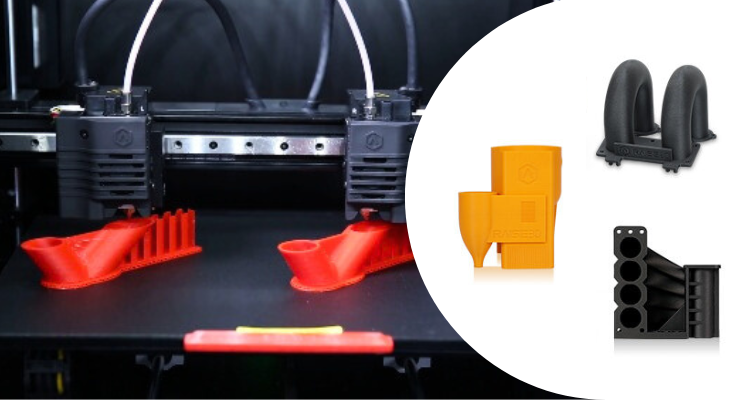
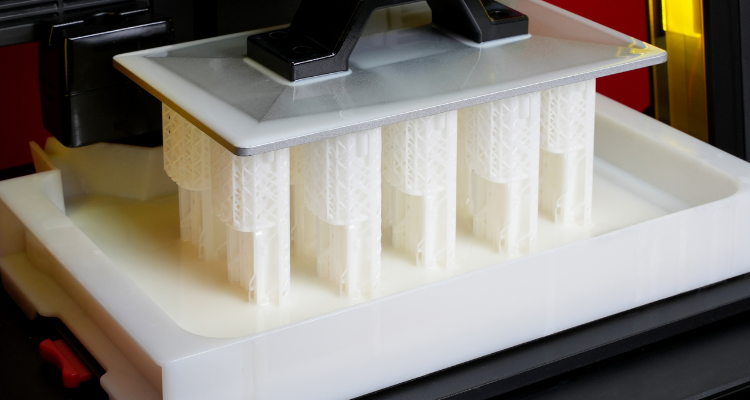
Unlike conventional manufacturing methods, additive manufacturing works through digital design files that can be produced on demand using industrial 3D printing systems. Once a design is finalized, the same file can be manufactured simultaneously across multiple facilities using identical machine settings and materials. This creates a highly scalable and decentralized production model where manufacturing is no longer limited by location.
A component designed in one city can now be produced with the same precision and repeatability in another city, state, or even country. This ability to digitally transfer manufacturing capability rather than physically transporting inventory is redefining how industries approach production and supply chain management.
One of the biggest advantages of additive manufacturing is its reduced dependency on tooling, molds, fixtures, and gauges. Traditional manufacturing processes often require molds, dies, fixtures, and extensive setup time before production can begin. Additive manufacturing eliminates many of these requirements by enabling direct production from digital files. This not only accelerates product development cycles but also allows industries to respond faster to market requirements and engineering changes as well as production customized products.
Is Digital Factories Future of Manufacturing?
Another major transformation is the shift from physical inventory to digital inventory. Instead of storing large volumes of spare parts or components, manufacturers can maintain digital libraries of validated designs and produce parts whenever required. This reduces warehousing costs, minimizes material wastage, and improves supply chain flexibility. Manufacturers no longer need to stock large inventories of spare parts and consumables for legacy products. Instead, they can produce components on demand at geographically distributed locations closer to customer sites whenever required.
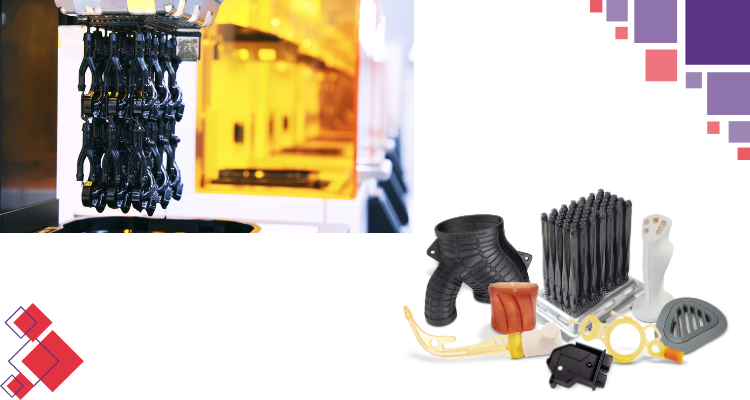
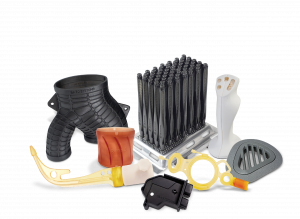
Industries such as automotive, aerospace, healthcare, tooling, jewellery, dental and industrial manufacturing are already adopting additive manufacturing for production-grade applications. From lightweight functional components and customized medical solutions to jigs, fixtures, and low-volume production parts, 3D printing is rapidly moving beyond prototyping into end-use manufacturing.
The ability to produce complex geometries with reduced material consumption also makes additive manufacturing an important contributor to sustainable manufacturing practices. By optimizing material usage and reducing transportation requirements, manufacturers can lower their environmental impact while improving operational efficiency.
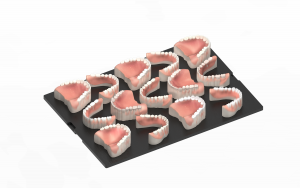
For example, in digital dentistry, intraoral scanners capture patient data that is used to design dental implants, prosthetics, and restorations at the dental clinic. The actual production of these components is then carried out using additive manufacturing systems in specialized dental labs.
Another example can be seen in the jewelry industry, where jewelry design companies create intricate CAD designs that can be digitally shared with manufacturers worldwide. These designs can then be produced locally using additive manufacturing systems, enabling a truly borderless production workflow.
As industries continue moving toward Industry 4.0 and smart manufacturing ecosystems, additive manufacturing is becoming a critical enabler of digital transformation. Connected manufacturing networks, automation, cloud-based production workflows, and decentralized manufacturing hubs are creating new opportunities for businesses to scale production more intelligently and efficiently
At Shree Rapid Technologies, we believe additive manufacturing is not just a technology trend but a strategic manufacturing solution for the future Digital factories. By helping industries adopt advanced 3D printing technologies, businesses can improve agility, accelerate innovation, and build more resilient production systems capable of adapting to evolving market demands.
The future of manufacturing will not be defined solely by the size or location of factories, it will be defined by how efficiently industries can leverage digital manufacturing technologies to produce smarter, faster, and without boundaries.
Borderless manufacturing is no longer a concept of the future, it is rapidly becoming the foundation of next-generation industrial production. Production through additive manufacturing requires a fundamentally different perspective than conventional manufacturing, this is exactly where Shree Rapid Technologies helping industries to identify and transition production from conventional manufacturing to additive manufacturing solutions, enabling greater innovation, efficiency, and performance.