
Resin 3D Printing Strength Explained: Performance, Applications & Limitations
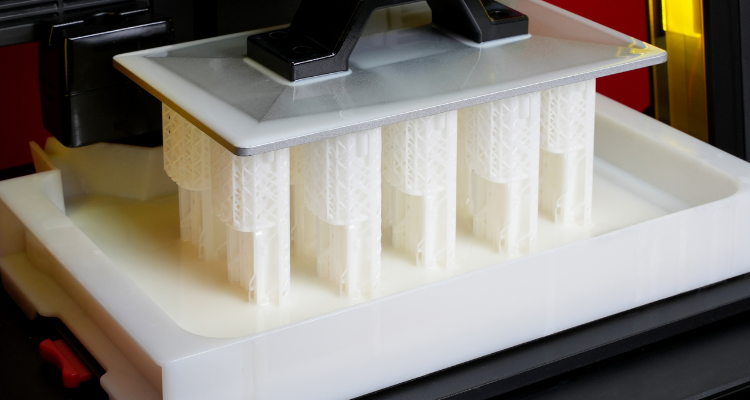
Resin 3D printing is widely known for producing parts with exceptional surface finish and fine details. But beyond aesthetics, resin-based additive manufacturing has matured into a capable solution for functional and performance-driven applications. Understanding where resin excels — and where it has limitations — is essential for engineers, designers, and manufacturers evaluating it for real-world use.
This blog explores how resin 3D printed parts perform mechanically, what applications they are best suited for, and how to make informed decisions when strength and durability matter.
Understanding Mechanical Performance in Resin 3D Printing
Mechanical performance in resin 3D printing is influenced by how photopolymer materials behave once cured. Unlike thermoplastics, resins undergo a chemical cross-linking reaction when exposed to light, creating parts that are typically stiff, dimensionally accurate, and isotropic.
Key performance characteristics include:
- High dimensional stability
- Excellent surface resolution
- Consistent feature accuracy
- Good tensile and flexural strength (depending on resin type)
However, stiffness does not always translate to toughness, making material selection and design intent critical.
Where Resin 3D Printing Delivers High Performance
1. Precision-Critical Applications
Resin printing is ideal where fine details, tight tolerances, and smooth surfaces are required. This includes dental models, jewellery patterns, medical guides, and inspection fixtures.
2. Functional Prototypes
Modern engineering and tough resins enable functional testing of parts before mass production. These prototypes can validate fit, form, and limited mechanical performance under controlled loads.
3. Jigs, Fixtures, and Tooling
With the right resin formulation, printed fixtures and assembly aids can withstand repetitive use, offering faster turnaround and customization compared to conventional tooling methods.
4. Short-Run End-Use Parts
For low-volume production, resin printing offers consistent part quality without the need for molds or tooling investments.
Limitations to Consider in Resin 3D Printing
Despite its advantages, resin 3D printing has inherent limitations that must be evaluated:
- Lower impact resistance compared to many thermoplastics
- Sensitivity to UV exposure over long periods
- Reduced heat resistance in standard resin formulations
- Brittle failure modes if parts are poorly designed or over-cured
These factors do not disqualify resin printing — but they do require thoughtful application-specific planning.
How Design Influences Resin Part Strength
Good design practices can significantly improve the durability of resin prints:
- Use gradual transitions instead of sharp corners
- Increase wall thickness in load-bearing areas
- Align part orientation with expected stress directions
- Avoid thin cantilevered features under load
Designing with resin behavior in mind ensures better performance and longer part life.
Role of Post-Processing in Performance Optimization
Post-processing is not optional when producing functional resin parts. Controlled washing and curing directly impact mechanical stability.
Proper post-processing helps:
- Achieve full material strength
- Improve chemical resistance
- Reduce long-term deformation
- Ensure consistent mechanical properties across batches
In industrial environments, standardized curing workflows are essential for repeatable results.
Resin vs Other Additive Manufacturing Materials
Resin materials often outperform basic thermoplastics in accuracy and stiffness, but they are not universal replacements. For applications requiring high impact strength, elevated temperature resistance, or extreme load-bearing capacity, alternative technologies such as SLS, FFF with engineering polymers, or metal additive manufacturing may be more suitable.
Choosing the right process depends on balancing strength, durability, precision, cost, and production volume.
Making the Right Choice for Your Application
Resin 3D printing is best viewed as a precision-focused manufacturing solution rather than a one-size-fits-all material choice. When matched correctly with application requirements, it delivers outstanding results in accuracy, surface quality, and functional reliability.
At Shree Rapid Industries (SRT), our Customer Innovation Centre (CIC) enables customers to evaluate resin technologies through real-world benchmarking, material testing, and application validation. This ensures the selected solution aligns with both performance goals and production needs.
Conclusion
Resin 3D printing has evolved into a powerful manufacturing tool for precision-driven and functional applications. While it may not replace all traditional manufacturing methods, its ability to deliver consistent quality, intricate geometry, and dependable mechanical performance makes it a valuable part of the digital manufacturing ecosystem.
By understanding its strengths, limitations, and design considerations, businesses can confidently integrate resin 3D printing into their production workflows and unlock new possibilities in product development and manufacturing.