
What Is 3D Printing? A Complete Guide to Working Principles, Components & Applications
What is 3D Printing?
3D Printing, also known as Additive Manufacturing, is a digital manufacturing process that creates physical objects layer by layer directly from a 3D CAD model. Unlike traditional subtractive methods, where material is removed through machining, 3D printing adds material only where required—resulting in minimal waste, greater design freedom, and faster product development.
Today, 3D printing has evolved from a rapid prototyping tool into a powerful production technology used to manufacture functional parts, complex assemblies, and end-use components across industries such as Aerospace, Automotive, Dental, Jewellery, Medical Devices, Machine Tooling, and Service Bureaus.
At Shree Rapid Industries (SRT), we enable this digital transformation by offering end-to-end additive manufacturing solutions—from materials and machines to scanning, inspection, and software.
How Does 3D Printing Work?
The working method of 3D printing follows a streamlined digital-to-physical workflow:
- Digital Design (CAD Model): The process begins with a 3D design created using CAD software or captured through 3D scanning. This digital file defines the geometry, dimensions, and features of the part.
- File Preparation & Slicing: The CAD model is converted into a printable file format and processed using slicing software. The slicer divides the model into thin horizontal layers and generates machine instructions that define print parameters such as layer thickness, speed, and support structures.
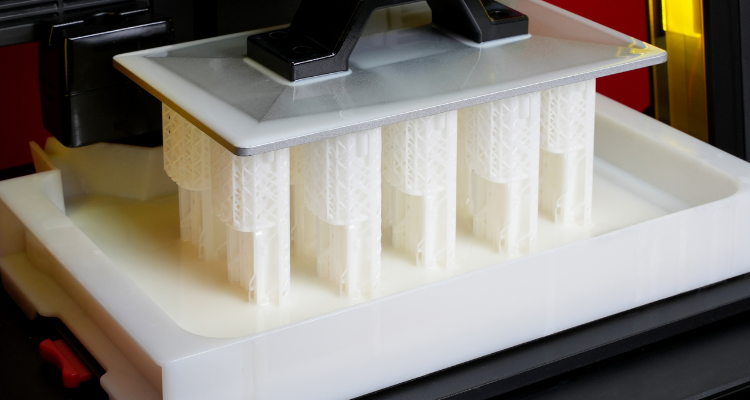
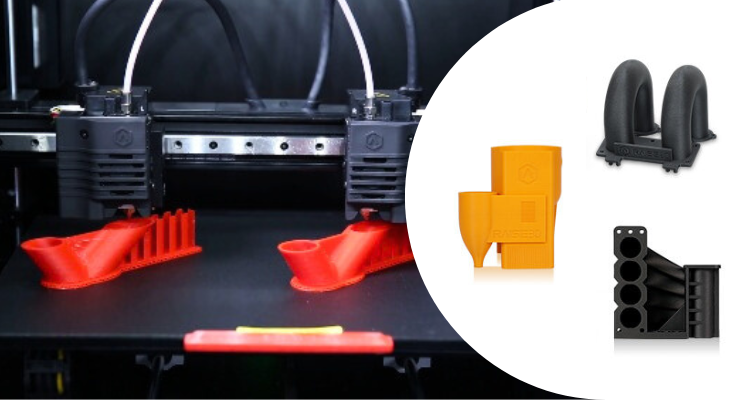
- Layer-by-Layer Manufacturing: Based on the selected technology—such as FFF, SLA, SLS, DMP, DLP, MJP, or Ceramic printing—the machine deposits, cures, sinters, or fuses material layer by layer to build the part.
- Post-Processing: After printing, parts may undergo post-processing steps such as support removal, curing, heat treatment, sintering, surface finishing, or inspection to achieve the desired mechanical and aesthetic properties.
Key Components of a 3D Printing System
A complete 3D printing ecosystem consists of multiple interconnected components:
- 3D Printer Hardware: The printer is the core of the system and varies based on technology. It includes motion systems, build platforms, print heads or lasers, and controlled environments for precision manufacturing.
- Printing Materials: Materials define the final part performance and can include:
- Polymers (filaments, resins, powders)
- Metals (powders produced via atomization)
- Ceramics (slurry or filament-based)
- Wax materials (especially for jewellery and investment casting)
- Software Solutions: Software plays a crucial role in design validation, slicing, simulation, and process optimization—ensuring accuracy, repeatability, and production efficiency.
- Post-Processing Equipment: Post-processing systems enhance functionality and surface quality through curing, debinding, sintering, polishing, or inspection.
- Inspection & Quality Control: Advanced 3D scanning and inspection systems verify dimensional accuracy and ensure compliance with industry standards—critical for regulated sectors.
Characteristics of 3D Printing Technology
3D printing stands out due to its unique characteristics that redefine manufacturing possibilities:
Design Freedom
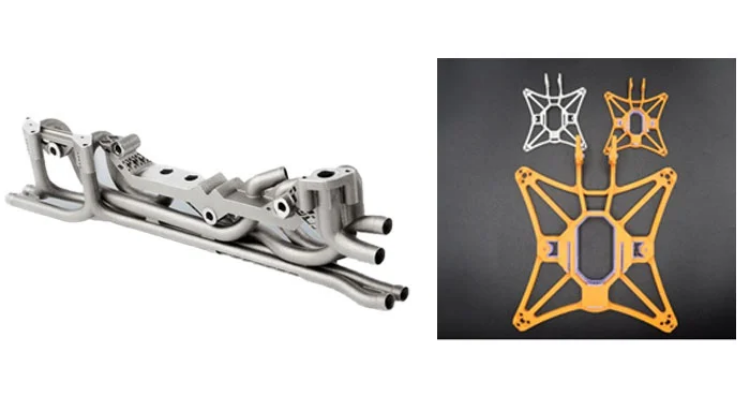
Complex geometries, internal channels, lattice structures, and lightweight designs are easily achievable without additional tooling.
Rapid Prototyping & Faster Time-to-Market
Designs can be validated quickly, enabling faster iterations and reduced product development cycles.
Customization at Scale
Each printed part can be different without increasing cost—ideal for mass customization in dental, medical, and jewellery applications.
Material Efficiency
Additive processes use material efficiently, reducing waste compared to traditional manufacturing methods.
Digital Manufacturing Workflow
Seamless integration with CAD, simulation, scanning, and inspection tools enables a fully digital and traceable production process.
Scalable from Prototype to Production
Modern 3D printing technologies support everything from early-stage prototypes to serial production and end-use parts.
Applications of 3D Printing Across Industries
3D printing is transforming multiple sectors:
- Aerospace & Defense: Lightweight, high-strength metal components
- Automotive: Functional prototypes, tooling, and custom parts
- Dental: Crowns, bridges, aligners, and surgical guides
- Jewellery: High-precision wax patterns and intricate designs
- Medical Devices: Patient-specific implants and surgical instruments
- Machine Tooling: Jigs, fixtures, and conformal cooling tools
- Service Bureaus: On-demand manufacturing and rapid turnaround
Why Choose Shree Rapid Industries (SRT)?
With over 17 years of experience, Shree Rapid Industries (SRT) is a trusted partner in India’s additive manufacturing ecosystem. Our Customer Innovation Centre (CIC) is equipped with advanced 3D printing, scanning, and inspection technologies that help customers and resellers benchmark, validate, and select the right solution for their application.
We offer:
- End-to-end additive manufacturing solutions
- Industry-leading OEM partnerships
- Expert consultation and application support
- Advanced materials and production-ready technologies
Conclusion
3D printing is more than a manufacturing method—it is a strategic enabler of innovation, efficiency, and digital transformation. By combining the right technology, materials, software, and expertise, organizations can unlock new possibilities in design and production.
At Shree Rapid Industries, we help businesses harness the true potential of additive manufacturing—from concept to creation. Explore how 3D printing can redefine your manufacturing journey with SRT.